Debt in Simple Words
Debt is money that you borrow and need to repay later.
You may borrow from a bank, credit card company, financial institution, employer, family member, friend, or another person. In many cases, you repay the borrowed amount over time through regular payments.
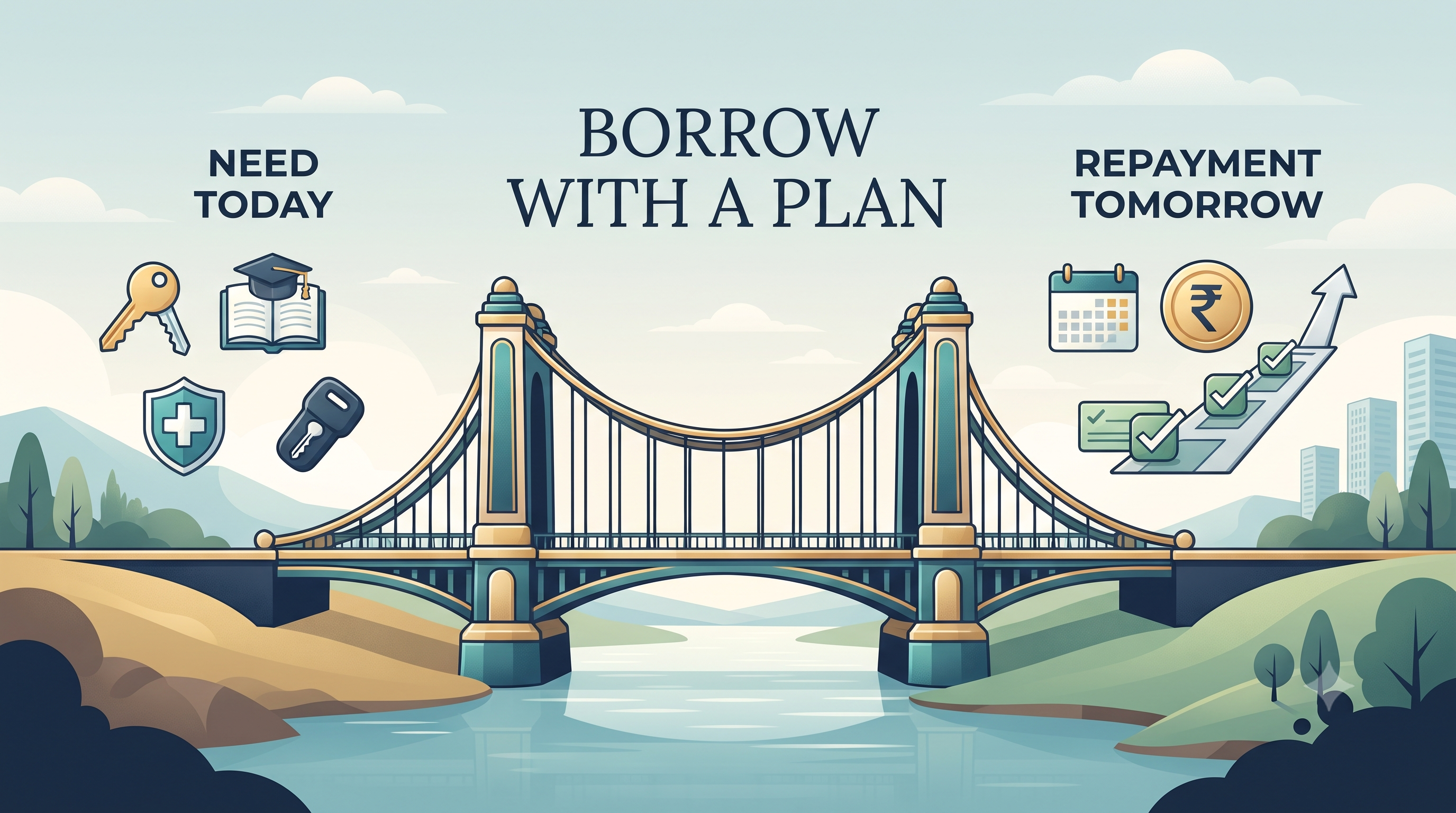
Debt gives you access to money today, but it creates a responsibility for your future income.
Borrowing is not automatically bad. Many people borrow for education, a home, medical treatment, a vehicle, or a genuine business need. The important question is not only “Can I get this loan?” but also “Can I repay it comfortably without damaging my daily financial life?”
Why Do People Take Debt?
People borrow when they need money before they have saved enough for a particular expense. Sometimes the need is urgent. Sometimes the expense is important but too large to pay at once.
Common Reasons People Borrow
- Buying or building a home
- Paying for higher education or professional training
- Buying a car, bike, or work-related vehicle
- Handling urgent medical expenses
- Managing a major family responsibility
- Starting or supporting a genuine business need
- Buying goods or services through credit cards or EMIs
- Managing an unexpected cash shortage
Debt becomes useful when it supports an important need and the repayment fits your actual income. It becomes dangerous when borrowing becomes a regular method of managing normal monthly expenses.
How Debt Works
When you borrow money, there are usually a few important parts to understand.
Important: Before borrowing, understand the total repayment amount, not only the money you will receive today.
Common Types of Personal Debt
Different types of debt are designed for different needs. The repayment structure, interest, time period, and risk may vary.
A Simple Borrowing Example
Suppose Rohan needs money for an important family medical expense. He borrows ₹1,20,000 and plans to repay it over 24 months.
Before Rohan Borrows, He Should Check:
- What will be his monthly repayment?
- How much total money will he repay over the full period?
- Does the repayment fit after rent, food, school, medical, and other essential costs?
- Will he still have money for an emergency or unexpected expense?
- What happens if he misses or delays a payment?
The right borrowing decision is not just about whether the loan is approved. It is about whether the repayment can fit into real life without creating a second problem.
Debt Is Not Always Bad
Debt is a financial tool. Like any tool, it can be useful when used carefully and harmful when used without planning.
More Thoughtful Borrowing
|
Risky Borrowing Patterns
|
How Debt Affects Your Monthly Cash Flow
Debt repayments become part of your monthly cash outflow. That means your available income becomes smaller after essential expenses and repayments are considered.
Available Income = Monthly Income − Essential Expenses − Debt Repayments
For example, a person may earn ₹50,000 per month. After rent, food, family needs, utility bills, and EMIs, there may be only a small amount left for savings or emergencies. This is why every new EMI should be considered carefully.
Important idea: A low monthly EMI may still become difficult if you already have several other repayments.
Credit Card Debt Needs Special Attention
A credit card can be useful for payments, convenience, and short-term cash management. But a card purchase still needs to be paid later. It should not be treated as extra income.
When you use a credit card, you are creating a payment obligation. If the full due amount is not paid according to the card terms, the remaining amount may continue and can become expensive.
Healthy Credit Card Habits
- Track every card purchase as soon as you make it.
- Keep enough money planned for the upcoming bill.
- Avoid using the full card limit just because it is available.
- Do not use a credit card to hide a weak monthly budget.
- Review your outstanding amount before making new non-essential purchases.
Signs Debt May Be Becoming Difficult
Debt can become stressful when you no longer feel in control of repayment dates, balances, or monthly commitments.
Watch for These Warning Signs
- You are using one loan or card to pay another bill.
- You do not know your total outstanding amount.
- You delay rent, food, utility bills, or medicine because EMIs take too much income.
- You make only minimum required card payments without a clear plan to clear the balance.
- You feel anxious before every repayment date.
- You are taking new debt for expenses that could have been planned earlier.
- You have little or no emergency money because all income is committed to repayments.
These signs are not a reason to panic or feel ashamed. They are a signal that your debt needs a clear list, a priority order, and a practical plan.
How to Manage Debt More Clearly
The first step is visibility. You cannot manage debt well if you do not know what you owe, when payments are due, and how much each repayment affects your monthly budget.
- List every loan, EMI, credit card due, and informal borrowing.
- Record the outstanding balance, repayment date, and regular payment amount.
- Separate essential debt from unnecessary or high-pressure debt.
- Avoid taking a new EMI unless your existing budget can handle it.
- Pay important dues on time to reduce avoidable charges and stress.
- Build an emergency fund gradually so every urgent expense does not become new borrowing.
- Review your debt position regularly and notice progress as balances reduce.
Debt and Net Worth
Debt is a liability. It reduces your net worth until it is repaid.
Net Worth = What You Own − What You Owe
For example, if you pay ₹10,000 toward a loan, money leaves your bank account, but your liability also becomes lower. This can improve your overall financial position because you owe less than before.
Questions to Ask Before Borrowing
Before accepting any loan, credit-card purchase, EMI, or borrowed money, ask yourself these questions.
- Is this expense necessary, useful, or urgent?
- Can I save for it instead of borrowing?
- Can my budget comfortably handle the repayment?
- Do I understand the total repayment cost and possible charges?
- Will this affect my emergency savings or important family expenses?
- What happens if my income is delayed or reduced for a few months?
- Will this debt help me move forward, or create more pressure later?
A Better Way to Think About Debt
Debt should be treated as a planned financial commitment, not as free money.
Every time you borrow, you are using some of your future income before it arrives. That may be worth it for an important purpose, but it should always be a conscious decision.
Start simple: Know every amount you owe, every due date, and every monthly repayment.
Clear visibility is the first step toward managing debt with less stress and more confidence.
Debt is a tool, not free money. Used with a plan, it can support an important need. Ignored, it can quietly take control of your future income.
This article is for general education and personal financial tracking. It is not investment, tax, or financial advice.