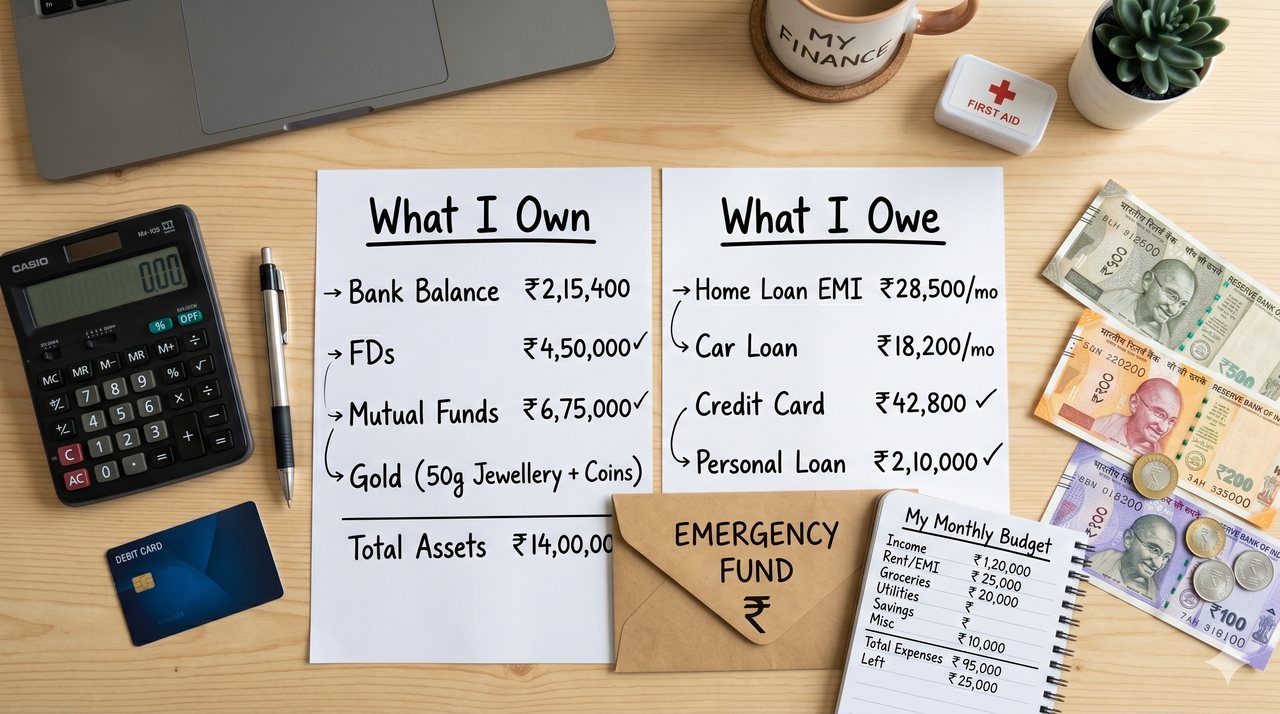
Emergency Fund in Simple Words
An emergency fund is money kept separately for unexpected but necessary expenses.
It is your financial safety net when life does not go according to plan. Instead of immediately borrowing money or using a credit card, you can use this reserve for a genuine emergency.
An emergency fund is not money for planned spending. It is money for unexpected financial pressure.
A medical expense, urgent home repair, temporary job loss, or sudden travel need can disturb your normal monthly budget. An emergency fund gives you time and breathing space to handle such situations calmly.
Why Do You Need an Emergency Fund?
Unexpected expenses can happen to anyone. The problem is not only the expense itself. The bigger problem is when there is no money available to handle it.
An Emergency Fund Can Help You:
- Avoid high-interest credit card borrowing.
- Avoid taking a personal loan for a short-term problem.
- Continue paying essential bills during a difficult period.
- Protect your long-term investments from being sold in a hurry.
- Reduce stress when an urgent expense appears.
- Make decisions with more confidence instead of panic.
What Counts as an Emergency?
An emergency is usually something that is unexpected, necessary, and difficult to delay.
Usually a Genuine Emergency
|
Usually Not an Emergency
|
Important: A predictable expense is not really an emergency. For example, annual insurance, school fees, festival shopping, or a planned trip should ideally be saved for separately through a budget or sinking fund.
How Much Should You Keep?
There is no one perfect amount for everyone. The right amount depends on your income stability, family responsibilities, monthly expenses, debt, health needs, and number of people who depend on you.
Emergency Fund Target = Essential Monthly Expenses × Number of Months You Want to Cover
For many people, a practical long-term goal is to keep enough money to cover around three to six months of essential expenses. People with irregular income, high family responsibility, or limited job security may prefer a higher reserve.
Your essential monthly expenses may include rent, groceries, electricity, medicine, insurance, school needs, travel for work, loan EMIs, and other unavoidable family expenses.
Start Small, Not Perfect
You do not need to wait until you can save a large amount. A small emergency fund is still better than having no emergency fund at all.
Step 1Build a small buffer |
Step 2Reach one month |
Step 3Build your full target |
Example: Saving ₹1,000, ₹2,000, or ₹5,000 every month may feel small at first. But regular saving creates a meaningful safety reserve over time.
Where Should You Keep an Emergency Fund?
An emergency fund should be reasonably safe and easy to access. The purpose is not to earn the highest possible return. The purpose is to make sure the money is available when you genuinely need it.
A Practical Way to Organise It
- Immediate access money: Keep a portion in a savings account for urgent needs.
- Short-delay money: Keep another portion in an option that can be accessed without major difficulty, if suitable for your situation.
- Separate from daily spending: Avoid keeping the full amount in the same account you use for everyday purchases.
Do not treat an emergency fund as regular investment money. It should not depend heavily on market conditions or require you to sell at a bad time.
When Should You Use It?
Before using your emergency fund, ask yourself three questions:
- Is this expense truly unexpected?
- Is it necessary or urgent?
- Would delaying it create a bigger problem?
If the answer is yes, using the emergency fund may be the right decision. After using it, make a plan to rebuild the amount gradually.
Emergency Fund vs Savings Goal
Emergency FundPurpose: Protect you from unexpected necessary expenses. |
Savings Goal or Sinking FundPurpose: Save for a known future expense, such as a vacation, insurance premium, festival, repair, or gadget. |
Keeping these separate helps you avoid using your emergency money for planned expenses.
A Simple Way to Start Today
Choose one small amount to save this month.
Create a separate emergency fund category or account, add what you can, and make it a regular habit. The amount may start small, but the protection it gives can become very valuable.
An emergency fund does not stop emergencies. It gives you the money and confidence to face them without panic.
This article is for general education and personal financial tracking. It is not investment, tax, or financial advice.