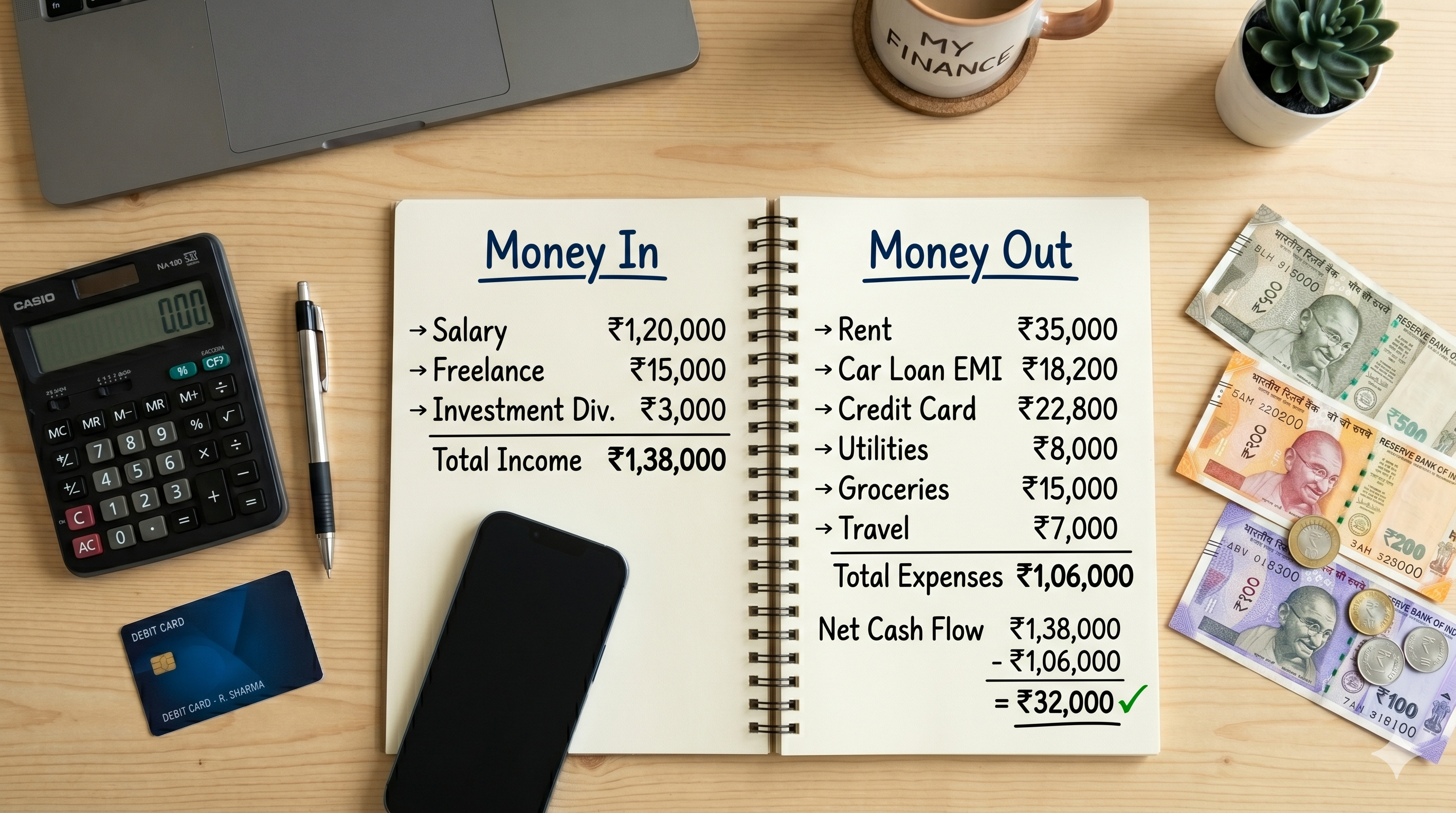
A Personal Budget in Simple Words
A personal budget is a simple plan for your money.
It helps you decide in advance how much money should go toward essentials, daily spending, savings, investments, debt repayments, and future goals.
A budget is not about stopping every expense. It is about giving your money a clear purpose before it disappears.
Without a budget, it is easy to feel that your income is enough at the beginning of the month but somehow disappears before the next salary date. A budget helps you understand where your money needs to go and what you can safely spend.
Why Is a Personal Budget Important?
A budget gives you a clearer picture of your financial life. It helps you plan for both today and tomorrow instead of reacting only after money has already been spent.
A Budget Can Help You:
- Avoid running short of money before the end of the month.
- Make sure rent, bills, EMIs, and essentials are covered first.
- Create regular savings without waiting for “leftover money.”
- Plan for irregular expenses before they become a problem.
- Reduce unnecessary spending without feeling restricted all the time.
- Work steadily toward emergency savings and personal financial goals.
A Budget Starts With Three Questions
1. How Much Money Is Coming In?Add your salary, business income, freelance earnings, pension, rent received, and other expected money. |
2. What Must Be Paid?List rent, groceries, bills, loan EMIs, insurance, medicine, school needs, and other essentials. |
3. What Do You Want to Build?Plan money for savings, investments, emergency funds, debt reduction, and future goals. |
The Basic Budget Formula
Income − Planned Spending − Savings and Goal Contributions = Money Left to Adjust
Ideally, every important part of your income should have a purpose. This does not mean you need to spend every rupee. It means you should decide where the money will go: essentials, savings, goals, flexible spending, or a buffer.
A Simple Monthly Budget Example
Suppose Priya receives a monthly salary of ₹50,000. She creates a simple plan before the month begins.
Monthly Income: ₹50,000
Total Planned: ₹48,000
Remaining Buffer: ₹2,000
The remaining ₹2,000 can stay as a buffer for small unexpected expenses, extra savings, or adjustments during the month.
A Budget Is Not the Same as a Spending Limit
Many people think a budget means saying “no” to every enjoyable expense. That is not true.
A good budget also makes room for personal spending, entertainment, eating out, hobbies, gifts, and things that matter to you. The aim is not to remove enjoyment from life. The aim is to spend without damaging essential needs, savings, or future plans.
A realistic budget is easier to follow than a strict budget that ignores your real life.
Common Budget Categories
Your categories should match your life. There is no need to copy somebody else’s exact budget.
Essential Categories
|
Growth and Flexible Categories
|
What Happens When You Do Not Budget?
Without a plan, small expenses can quietly add up. You may not notice how much is going toward food delivery, subscriptions, shopping, fuel, or repeated small payments until the month is almost over.
Common problem: People often save only what remains after spending. A better approach is to plan savings and important goals first, then decide how much can be spent freely.
How to Start Your First Budget
- Write down your expected income for the month.
- List fixed expenses such as rent, EMIs, insurance, and bills.
- Estimate spending for food, travel, personal needs, and other regular categories.
- Set an amount for savings, emergency funds, debt reduction, or a financial goal.
- Keep a small buffer for unexpected but minor expenses.
- Review the plan during the month and adjust it without guilt when needed.
Your Budget Can Change
A budget is not a one-time rulebook. It should change when your income, family needs, priorities, debt, or goals change.
For example, a person preparing for a wedding, planning education expenses, repaying a loan, or building an emergency fund may need a different budget from someone with no debt and a stable monthly income.
Reviewing your budget once a month is usually enough. The goal is progress, not perfection.
Start simple: You do not need ten categories or a complicated spreadsheet.
Start by tracking income, essentials, savings, and flexible spending. As you understand your habits better, you can make your budget more detailed.
A budget gives every important rupee a purpose, so your money supports your life instead of controlling it.
This article is for general education and personal financial tracking. It is not investment, tax, or financial advice.