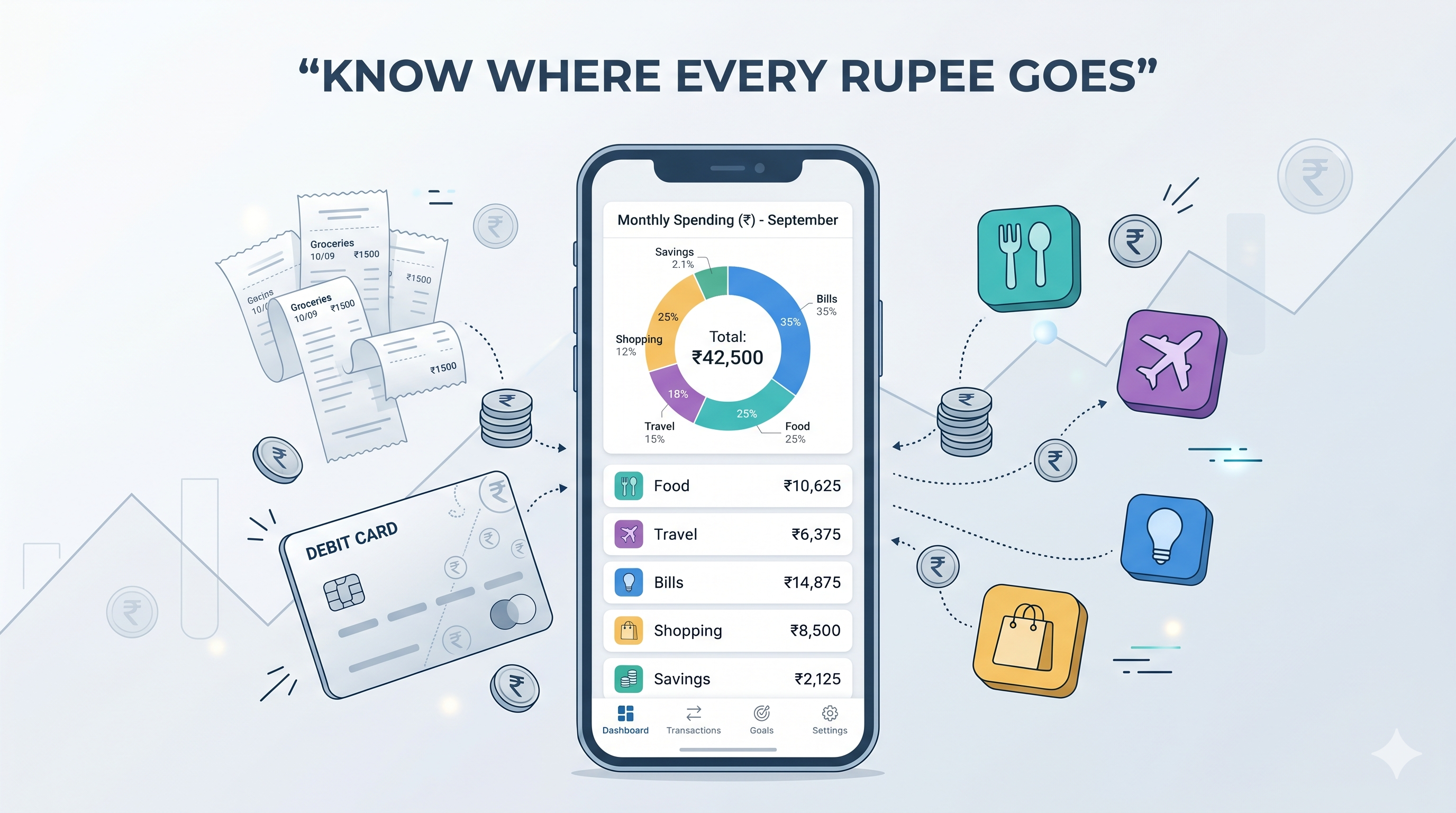
Expense Tracker in Simple Words
An expense tracker is a tool or habit that helps you record every amount you spend.
It can be a notebook, spreadsheet, mobile app, or finance website. The purpose is simple: know where your money goes instead of wondering why it disappears.
You cannot improve spending that you do not understand. An expense tracker makes your spending visible.
Many expenses feel small at the time: a snack, a cab ride, an online order, a subscription, or a quick payment through UPI. But when these small expenses are repeated, they can become a large amount by the end of the month.
Why Should You Track Expenses?
Expense tracking is not about feeling guilty for spending money. It is about making informed choices.
An Expense Tracker Can Help You:
- See exactly where your money is going.
- Identify categories where spending is higher than expected.
- Avoid running out of money before the month ends.
- Find subscriptions, repeated payments, or unnecessary expenses.
- Create a more realistic personal budget.
- Save more without guessing where to cut back.
- Review spending patterns before taking on a new EMI or loan.
What Should You Record?
The most useful expense tracker records enough detail to help you understand the payment later. You do not need to make it complicated.
Simple rule: Record the expense as soon as possible. The longer you wait, the easier it is to forget small payments.
Common Expense Categories
Categories make your expense tracker useful. They show which parts of life are taking the biggest share of your money.
Essential Expenses
|
Flexible Expenses
|
You can create more detailed categories later. At the beginning, keeping categories simple makes it easier to build the tracking habit.
A Simple Expense Tracker Example
Suppose Ravi records a few expenses during one week.
After recording expenses for a month, Ravi may notice that food delivery, entertainment, or small online purchases are taking more money than he expected. This awareness helps him make better choices next month.
Expense Tracking Is Not About Stopping All Spending
A good expense tracker should not make you feel that every rupee spent is wrong.
It should help you distinguish between spending that is necessary, spending that brings genuine value, and spending that happens without much thought.
The goal is not to remove all enjoyment from your budget. The goal is to make sure your spending matches your priorities.
How Expense Tracking Helps With Budgeting
A budget tells you how much you plan to spend. An expense tracker tells you how much you actually spent.
BudgetPurpose: Plan where your money should go before you spend it. |
Expense TrackerPurpose: Record where your money actually went after you spent it. |
Using both together gives you a much stronger view of your money. You can compare your plan with reality and improve month by month.
How to Start Tracking Expenses
- Choose one place to record your expenses: an app, website, spreadsheet, or notebook.
- Create a few simple categories such as food, travel, bills, shopping, and health.
- Record each expense as soon as possible.
- Review your spending once every week or at least once every month.
- Look for one or two categories where you can make a small improvement.
Start simple: You do not need to track every detail perfectly from the first day.
Start by recording your major expenses and daily payments for one month. The habit matters more than having the perfect category system.
When you know where every rupee goes, you can decide where the next rupee should go.
This article is for general education and personal financial tracking. It is not investment, tax, or financial advice.