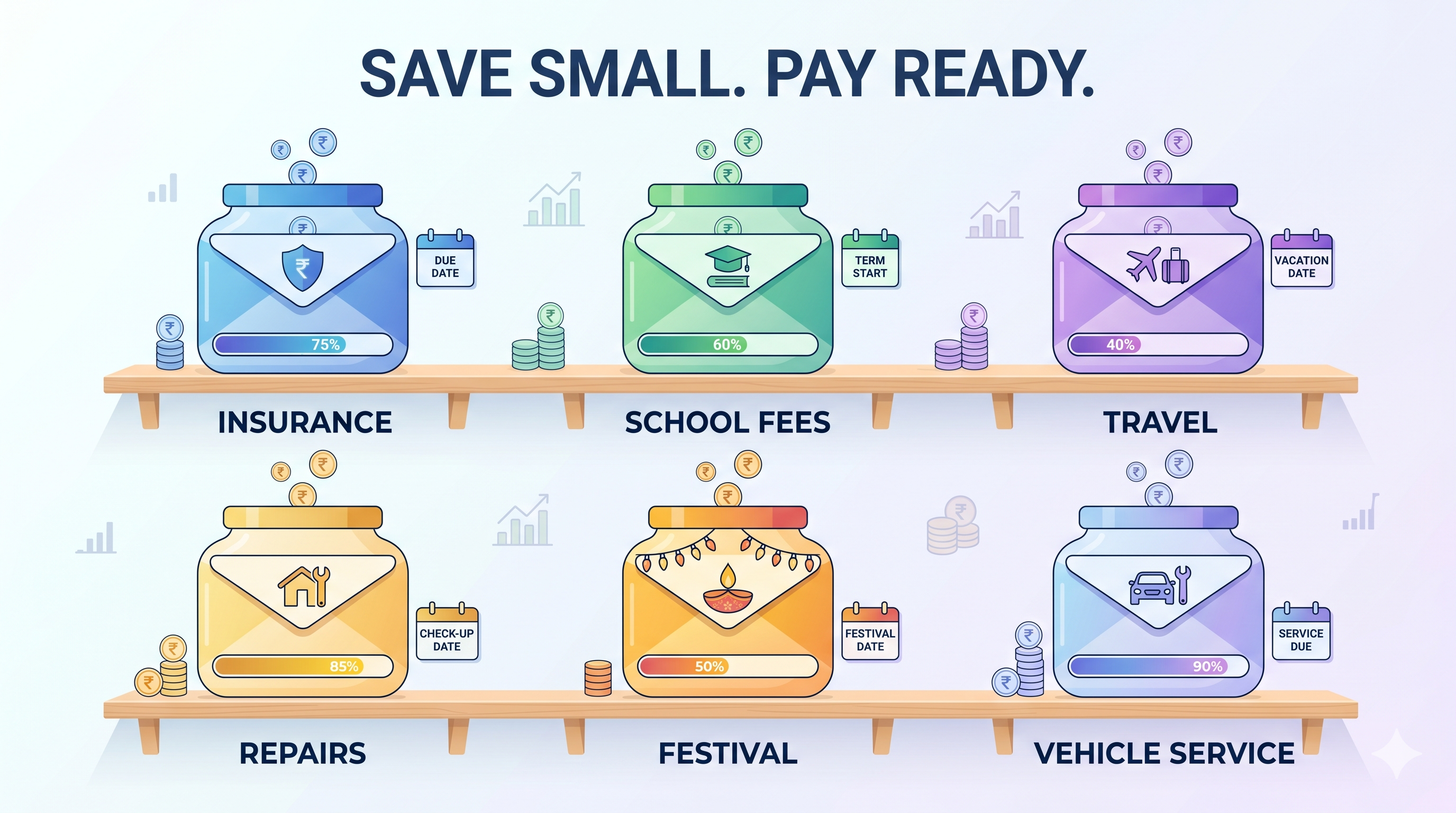
Sinking Fund in Simple Words
A sinking fund is money you save little by little for an expense that you already know will happen in the future.
The expense may not be due today, but it is expected. Instead of arranging a large amount at the last moment, you prepare for it gradually.
A sinking fund turns a future expense into small, manageable monthly savings.
For example, you may know that your insurance premium, school fee, vehicle service, annual family function, or home repair will come later. A sinking fund helps you save for it before it becomes stressful.
Why Is It Called a Sinking Fund?
The name may sound unusual, but the idea is simple.
You slowly set aside money over time so that when a future bill or planned expense arrives, you already have the amount ready. The future expense does not “sink” your monthly budget because you prepared for it in advance.
A sinking fund is for expected expenses. An emergency fund is for unexpected expenses.
Examples of Expenses You Can Plan With a Sinking Fund
A sinking fund is useful for expenses that are important but do not happen every month.
Common Sinking Fund Categories
- Annual insurance premiums
- School fees, books, uniforms, or coaching fees
- Vehicle servicing, repairs, and insurance renewal
- Home repairs, painting, or appliance replacement
- Festival spending and gifts
- Planned travel or family events
- Medical check-ups or dental treatment you know may be needed
- Mobile, laptop, or other planned purchases
- Professional courses, exam fees, or skill development
These expenses are not always emergencies. In many cases, they are predictable. That is exactly why planning for them early can make a big difference.
How a Sinking Fund Works
A sinking fund has three basic parts:
1. A Known ExpenseChoose an expense you expect in the future, such as insurance renewal or school fees. |
2. A Target AmountEstimate how much money you may need for that expense. |
3. A Regular ContributionSave a smaller amount every month until the due date arrives. |
The Simple Sinking Fund Formula
Monthly Sinking Fund Contribution = Expected Cost ÷ Number of Months Remaining
This formula helps you turn a large future expense into a smaller monthly plan.
A Simple Example
Suppose Meera knows that her annual health insurance premium will be due after 10 months. She expects it to cost around ₹24,000.
₹24,000 ÷ 10 months = ₹2,400 per month
By saving ₹2,400 each month, Meera can pay the insurance premium without disturbing her regular monthly budget or taking debt.
Sinking Fund vs Emergency Fund
Both are useful, but they are meant for different situations.
Sinking FundUsed for: Known or expected future expenses. Examples: insurance, school fees, festival spending, vehicle servicing, repairs, travel, and planned purchases. |
Emergency FundUsed for: Unexpected and urgent financial problems. Examples: medical emergency, sudden income loss, urgent repair, or an unavoidable family emergency. |
Important: Do not use your emergency fund for annual expenses that you already knew were coming. A sinking fund is made specifically to prevent that problem.
Sinking Fund vs Savings Goal
The two ideas are closely related, but there is a small difference in how people usually use them.
Savings GoalUsually used for a personal target or a future dream, such as a laptop, higher education, a house down payment, or starting a business. |
Sinking FundUsually used for a known future bill or planned expense that must be paid, such as insurance, fees, repairs, or annual renewals. |
In practical life, both help you save ahead. The main benefit is that you stop treating known future expenses as sudden surprises.
Should You Create Separate Funds?
Yes, whenever possible. Separate funds make it easier to see what each amount is meant for.
For Example, You May Create Separate Funds For:
- Insurance renewal
- School and education expenses
- Vehicle maintenance
- Festival and gift spending
- Home repairs
- Travel or annual family events
You do not need a separate bank account for every fund. You can track separate categories inside your budgeting or finance-tracking system while keeping the actual money in one or two suitable accounts.
How to Start Your First Sinking Fund
- Choose one known future expense.
- Estimate how much it may cost.
- Check how many months are left before you need the money.
- Divide the expected cost by the months remaining.
- Set aside that amount regularly after receiving income.
- Review the target when the expected cost or due date changes.
Start small: Begin with one predictable expense that usually creates pressure at the last minute.
Even a small monthly contribution can make a big difference when the due date finally arrives.
Known expenses should be planned, not feared. A sinking fund helps you pay ready instead of paying in panic.
This article is for general education and personal financial tracking. It is not investment, tax, or financial advice.