Loan EMI in Simple Words
EMI means Equated Monthly Instalment.
It is the regular amount you pay every month to repay a loan over a fixed period. In most loan arrangements, an EMI includes a part of the original loan amount and a part of the interest charged on that loan.
An EMI may look like one monthly payment, but it is made up of principal repayment and interest cost.
EMIs are commonly used for home loans, vehicle loans, personal loans, education loans, consumer loans, and other borrowing where repayment is spread over months or years.
What Does an EMI Include?
Every EMI usually has two main parts.
PrincipalThis is the part of your EMI that reduces the original amount you borrowed. |
InterestThis is the cost charged for using the lender’s money over time. |
As the loan continues, the exact mix of principal and interest inside each EMI can change. In many common repayment structures, the earlier EMIs include a larger interest portion, while later EMIs include more principal repayment.
Simple idea: Paying an EMI does not only pay interest. It also gradually reduces the amount you still owe.
Why Is It Called an “Equated” Monthly Instalment?
“Equated” means the scheduled monthly payment is usually the same amount each month during the agreed repayment period.
For example, if your EMI is ₹8,000, you may be required to pay ₹8,000 every month on or before the due date until the loan is repaid, subject to the terms of the loan.
However, an EMI may change in some situations. For example, floating-rate loans can be affected when the applicable interest rate changes, depending on the loan agreement and lender process.
What Decides Your EMI Amount?
Your EMI is not decided by only one number. It mainly depends on the loan amount, interest rate, and repayment period.
The Main Factors
- Loan amount: Borrowing more usually increases the EMI or the total repayment cost.
- Interest rate: A higher rate can increase the overall cost of borrowing.
- Loan tenure: A longer repayment period may reduce the monthly EMI but can increase the total interest paid over time.
- Loan type and repayment structure: Different loans can have different rules, charges, and payment schedules.
- Prepayments or changes in loan terms: Extra repayments or revised terms may affect the balance, EMI, or remaining period.
A Simple EMI Example
Suppose Mehul takes a personal loan of ₹2,00,000. His lender provides a repayment schedule with a monthly EMI of ₹9,500 for a fixed number of months.
Mehul should not only check whether ₹9,500 feels manageable today. He should check whether it remains manageable after rent, household costs, insurance, existing EMIs, credit card bills, savings, and emergency needs are considered.
A Smaller EMI Is Not Always Cheaper
A longer loan tenure can make an EMI look more comfortable because the repayment is spread over more months. But this does not always mean the loan becomes cheaper overall.
Shorter Repayment Period
|
Longer Repayment Period
|
Before choosing a tenure: Compare both the monthly EMI and the total repayment shown in the lender’s repayment schedule.
How EMI Affects Your Monthly Budget
An EMI is a fixed commitment. Once you take a loan, the repayment date comes every month whether the month is easy or difficult.
Money Left After EMI = Monthly Income − Essential Expenses − All Debt Repayments
For example, a person earning ₹55,000 per month may feel that a ₹5,000 EMI is affordable. But the decision can change if they already pay rent, school expenses, insurance, credit card bills, vehicle costs, another EMI, or family medical expenses.
Why Multiple EMIs Can Become Stressful
- Each EMI reduces your available income before the month even begins.
- Small individual EMIs can become a large combined monthly burden.
- A new EMI may leave less money for emergency savings and planned expenses.
- Income delays or sudden expenses can become harder to manage.
- You may start relying on credit cards or new loans to cover normal costs.
EMI Due Date and Timely Payment
Every loan has a repayment schedule and due date. Missing or delaying a payment can create additional charges or other consequences according to the lender’s terms.
That is why it is useful to treat EMIs like rent, school fees, insurance, or medicine: as a planned priority, not as an optional expense.
Simple EMI Management Habits
- Keep every EMI due date in one place.
- Know the exact monthly payment for each loan.
- Keep enough money available before the due date.
- Track outstanding balances, not only the EMI amount.
- Review whether a new EMI is really necessary before accepting it.
- Plan annual and irregular expenses separately so they do not disturb loan payments.
Can an EMI Change?
It can, depending on the type of loan and its terms. Fixed-rate and floating-rate loans may behave differently. In some cases, a lender may adjust the repayment amount, the loan tenure, or provide options when applicable interest rates change.
Always read your loan documents and notices carefully. If a lender communicates a change, check how it affects your monthly budget and total repayment.
Do not assume an EMI will always remain unchanged. Review loan statements and lender communication, especially for loans linked to changing interest rates.
What to Check Before Accepting an EMI Loan
- Check the total amount you need to repay. Do not decide based only on the monthly EMI.
- Check the interest rate and all applicable charges. Ask for a clear repayment schedule.
- Add all existing EMIs. Look at the total monthly debt burden, not one EMI alone.
- Protect essential spending. Rent, food, medicine, school needs, and insurance should remain manageable.
- Keep an emergency buffer. Do not use every rupee of your income for fixed repayments.
- Consider alternatives. Ask whether saving, choosing a lower-cost option, or delaying the purchase may be better.
Loan EMI and Net Worth
A loan is a liability, so it reduces your net worth until it is repaid.
Net Worth = What You Own − What You Owe
When you pay an EMI, the principal portion helps reduce the amount you owe. This is why tracking your outstanding loan balance is just as important as tracking the EMI amount.
A Better Way to Think About EMI
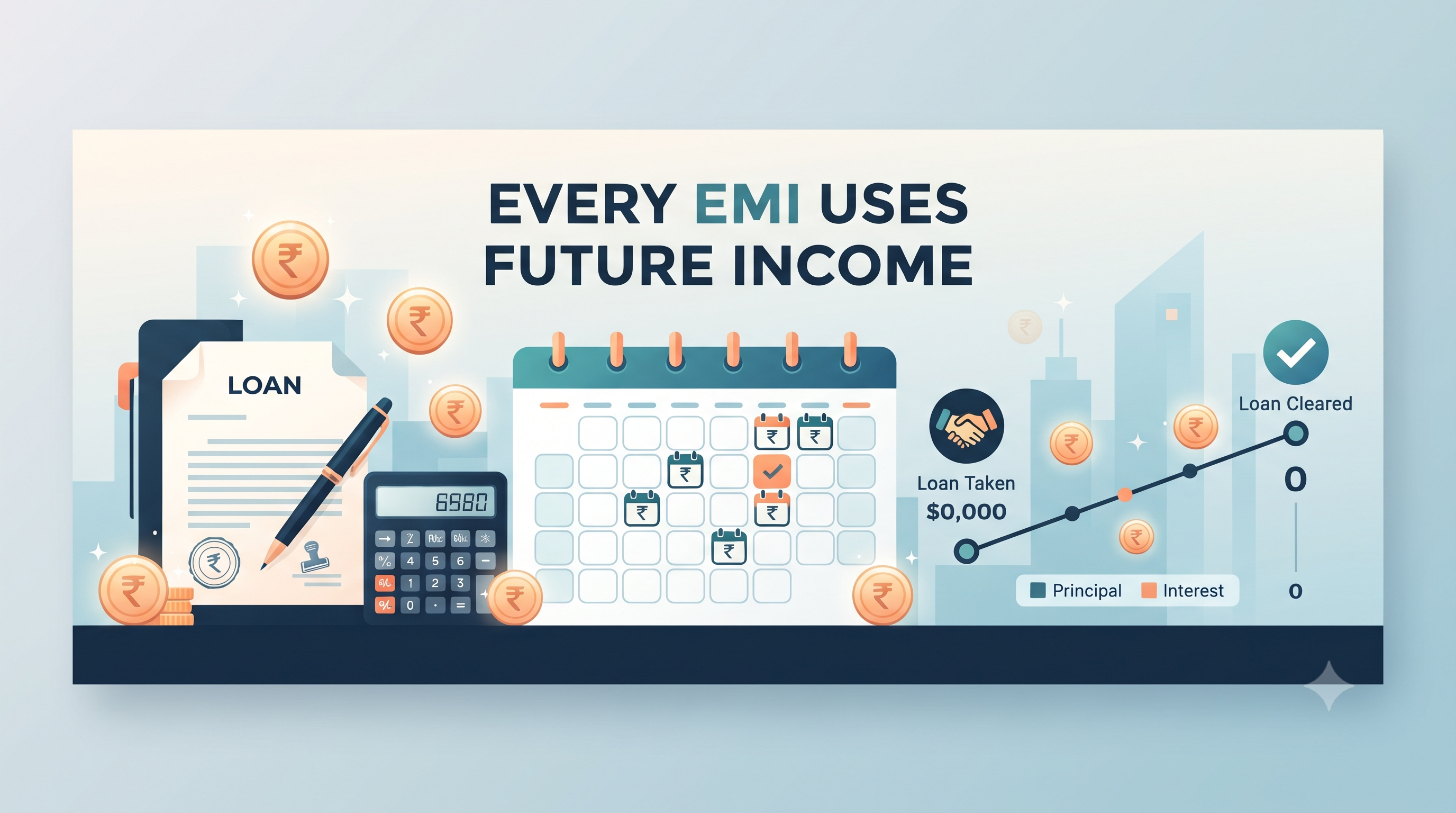
An EMI is not just a monthly bill. It is a commitment against your future income.
Before taking one, ask whether the expense is necessary, whether the loan cost is reasonable, and whether the payment still allows you to manage your normal life with enough financial safety.
Start simple: Keep a clear list of every EMI, due date, outstanding balance, and the reason you took the loan.
When you can see the full picture, it becomes easier to avoid over-borrowing and make repayments with less stress.
An EMI can help spread an important cost over time. But every EMI should fit your budget, your goals, and your real financial life.
This article is for general education and personal financial tracking. It is not investment, tax, or financial advice.