Credit Card Outstanding in Simple Words
A credit card outstanding is the amount you still need to pay to your card issuer.
It can include card purchases, fees, taxes, previous unpaid balance, and other charges, minus payments, refunds, or reversals that have already been recorded.
A credit card helps you pay now, but the payment responsibility comes later.
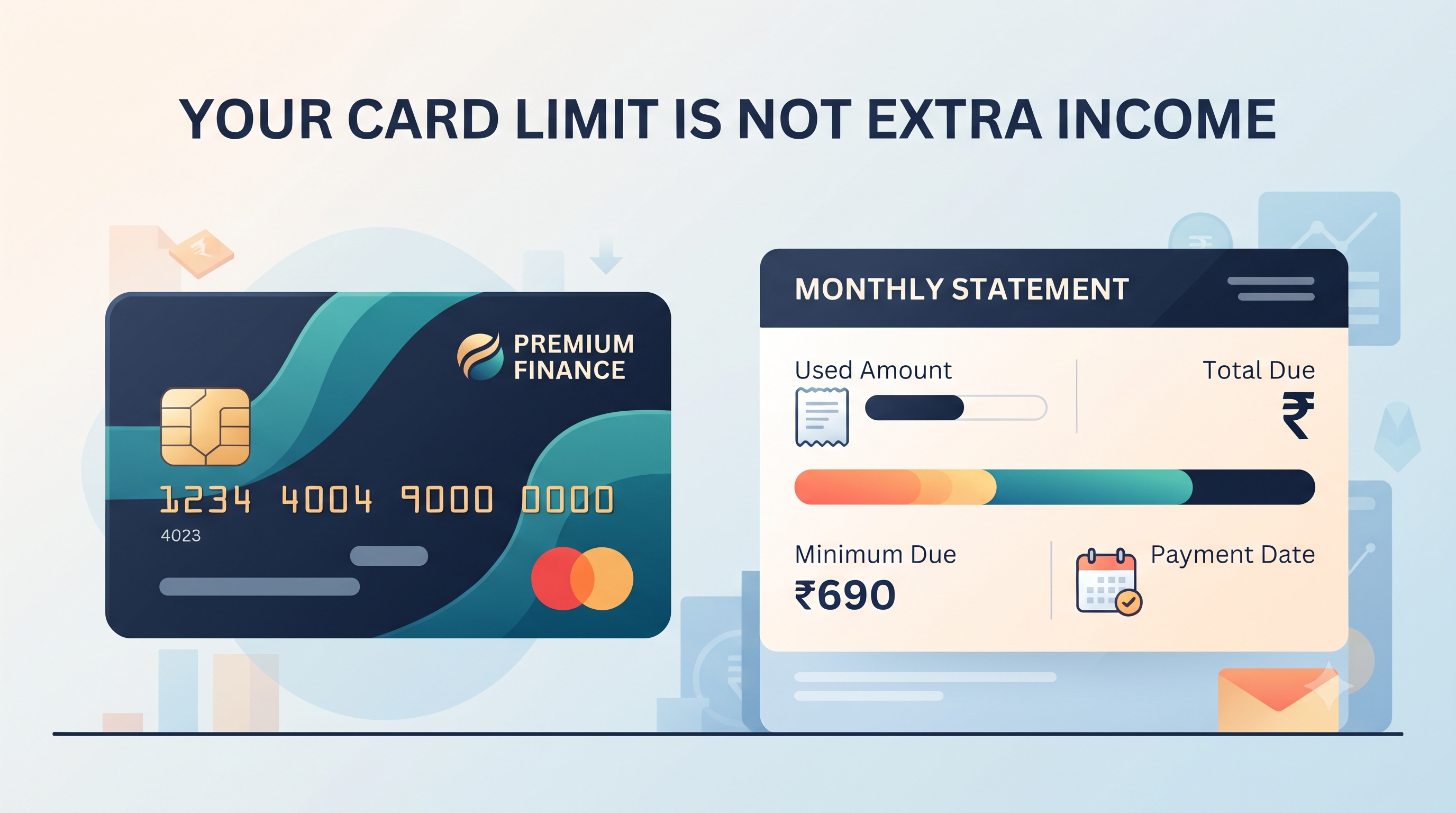
A card limit is not extra income. It is the maximum amount of credit that may be available to use according to your card terms. Every purchase you make using that credit creates an amount that you need to repay.
How Does Credit Card Outstanding Build Up?
Your outstanding balance changes whenever you use the card or make a payment.
Your Outstanding Can Increase Because Of:
- Shopping in stores or online
- Food, travel, fuel, bills, subscriptions, or other card payments
- EMIs created on card purchases
- Previous statement balance that remains unpaid
- Applicable interest, late charges, or other card-related charges
- Cash withdrawal or similar transactions, where applicable under your card terms
Your Outstanding Can Reduce Because Of:
- Payments made toward the card bill
- Refunds from merchants
- Transaction reversals or corrections
- Credits applied by the card issuer where applicable
Important Terms on a Credit Card Statement
Your monthly card statement may contain several numbers. Understanding the difference helps you avoid confusion.
A Simple Example
Suppose Anjali uses her credit card during the month for a few regular expenses.
If Anjali has no earlier unpaid balance and no other applicable charges, her card statement may show a total amount due around ₹10,000 for that billing cycle.
If she pays ₹10,000 in full by the due date according to her card terms, the related statement balance is cleared. If she pays less, part of the amount may remain outstanding.
Credit Card Outstanding = Previous Unpaid Balance + New Charges − Payments − Refunds
Why Paying Only the Minimum Due Can Be Risky
The minimum amount due is not the same as clearing the full statement balance.
Paying the minimum amount may help keep the account from being treated as completely unpaid under the card terms, but it can leave a large part of the bill outstanding. That unpaid portion may carry forward and may lead to interest or other charges according to the card agreement.
Important: Treat the minimum due as a warning signal, not as the ideal payment target. Always check your own statement and card terms for the exact consequences of partial payment.
Credit Card Outstanding Is a Liability
Your card outstanding is money you owe. That means it is a liability and reduces your net worth until it is paid.
Net Worth = What You Own − What You Owe
Even though you may have received the product, service, or convenience earlier, the card bill remains a financial obligation until it is cleared.
How Card Outstanding Can Affect Your Budget
A card payment is part of your monthly cash outflow. If you do not plan for it, you may end up using next month’s income to pay for previous month’s spending.
Healthy Card Use
|
Risky Card Use
|
How to Track Your Credit Card Outstanding
Tracking your card balance is easier when you do not wait only for the monthly statement.
- Record every card purchase under the correct spending category.
- Keep the card outstanding visible separately from bank-account money.
- Check your billing date and payment due date.
- Review your statement for unknown, duplicate, reversed, or refunded transactions.
- Plan the card payment before spending money on optional items.
- Reduce new card spending if the existing outstanding already feels difficult to clear.
Questions to Ask Before Using Your Credit Card
- Would I still make this purchase if I had to pay from my bank account today?
- Do I already have enough money planned to clear this amount?
- What will my total outstanding become after this purchase?
- Will this affect rent, EMIs, savings, emergency money, or other priorities?
- Is this purchase necessary, planned, or simply impulsive?
- Can I pay the expected statement amount by the due date?
A Better Way to Think About Card Spending
A credit card is a payment tool, not an income tool.
Using it responsibly means treating every card purchase as money already committed from your future bank balance. This simple mindset helps prevent card debt from quietly growing.
Start simple: Check your card outstanding after every major purchase and before making a new optional purchase.
When you know what you owe before the statement arrives, you can make better decisions with less stress.
The best credit card habit is simple: know your outstanding, know your due date, and never treat borrowed spending as extra money.
This article is for general education and personal financial tracking. It is not investment, tax, or financial advice.